

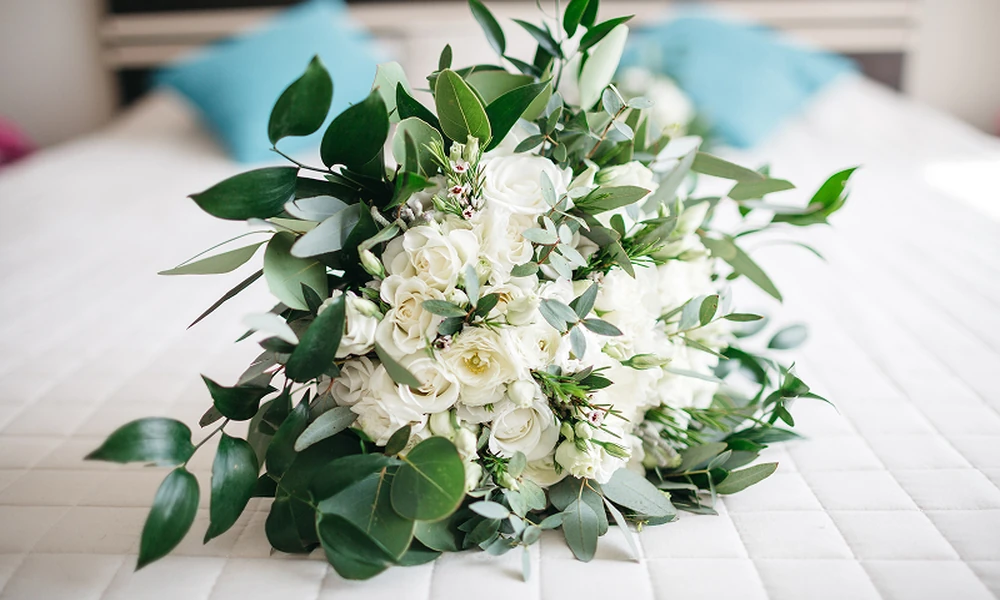
Wedding bouquet styles have changed alongside developments in floristry, fashion and wedding aesthetics. While traditional bouquets often favoured structured forms and established floral conventions, contemporary arrangements cover a wider range of shapes, colours and plant materials.
These changes do not mean that traditional designs have disappeared. Many elements associated with earlier bridal bouquets continue to influence the modern wedding bouquet in Singapore and elsewhere, but they may be adapted through different colours, proportions and arrangement techniques.
What Did Traditional Wedding Bouquets Look Like?
Traditional wedding bouquets varied considerably by period and culture. In Western wedding traditions, however, several recognisable bouquet forms became established during the nineteenth and twentieth centuries.
Common characteristics included:
- Structured shapes: Round, posy and cascading arrangements created clearly defined silhouettes.
- White and pale flowers: White became strongly associated with Western bridal fashion during the Victorian era, although wedding flowers were not limited to this colour.
- Popular flowers: Roses, lilies, carnations, stephanotis and lily of the valley have appeared in traditional bridal arrangements.
- Formal presentation: Flowers were often arranged to create a balanced and cohesive appearance.
- Symbolism: Particular flowers were historically assigned meanings through the Victorian practice known as the language of flowers.
Cascade bouquets became especially recognisable during parts of the twentieth century. These arrangements allow flowers and foliage to extend downwards from the bride’s hands, producing a vertical shape.
Traditional bouquet styles therefore tended to emphasise recognisable forms and established floral conventions. Contemporary floristry retains some of these foundations while allowing considerably more variation.
What Defines a Contemporary Wedding Bouquet?
There is no single shape that defines a contemporary wedding bouquet. Modern arrangements range from compact minimalist bouquets to large, asymmetrical and garden-inspired designs.
Several features commonly distinguish current approaches:
- Greater variety in shape: Bouquets may be asymmetrical, elongated, loosely gathered or intentionally compact.
- Broader colour palettes: Modern weddings can incorporate monochromatic, pastel, neutral or contrasting colour schemes.
- Visible foliage: Leaves, grasses, branches and other botanical materials can become significant parts of the arrangement rather than simply supporting flowers.
- Texture: Florists may combine flowers of different sizes and forms to create visual contrast.
- Personalisation: Flower choices can reflect the wedding’s colour scheme, setting, season or the couple’s preferences.
Contemporary bouquets can also reinterpret established designs. A traditional round bouquet, for example, may use an unexpected colour palette or fewer flower varieties to produce a more current appearance.
This flexibility means that today’s wedding bouquet does not have to fit neatly into either a traditional or modern category. Many arrangements combine characteristics of both.
What Is the Difference Between Traditional and Contemporary Wedding Bouquets?
The main differences concern composition, shape and the way established conventions are interpreted.
| Feature | Traditional bouquets | Contemporary bouquets |
| Shape | Often round, compact or cascading | May be asymmetric, loose, sculptural or compact |
| Colour | Frequently white, cream or restrained palettes | Wider range of monochromatic and mixed palettes |
| Structure | Usually clearly defined | Can range from highly structured to intentionally loose |
| Foliage | Often supportive | May become a prominent design element |
| Styling | Draws strongly on established forms | Often adapts forms to the wider wedding aesthetic |
These categories can overlap. Cascading bouquets, for instance, have historical precedents but continue to appear in contemporary weddings with updated flowers, foliage and proportions.
Traditional flowers can similarly be arranged in modern ways. Roses or lilies do not automatically make an arrangement traditional; shape, spacing, colour and accompanying materials also affect its overall style.
The same principle can apply beyond the wedding day. A wedding anniversary bouquet might revisit flowers from an original bridal arrangement while presenting them in a different style, connecting an established floral choice with a later occasion.
How Can You Choose Between a Traditional and Contemporary Wedding Bouquet?
Choosing a bouquet usually involves more than deciding whether a design looks traditional or modern. Practical factors can help narrow the options.
Consider:
- Wedding attire: Bouquet proportions should work comfortably with the outfit rather than obstruct important details.
- Overall wedding style: Formal, minimalist, garden-inspired and other settings may call for different floral approaches.
- Colour palette: Flowers can coordinate with or provide contrast to clothing and surrounding décor.
- Season and availability: Some flower varieties are easier to obtain at particular times of year or may need to be imported.
- Handling: The bouquet should remain practical to hold during photographs, the ceremony and movement between locations.
- Personal significance: Flowers associated with family traditions or important memories can be incorporated regardless of design category.
A couple may also choose a hybrid approach, such as traditional flowers arranged asymmetrically or a classic round bouquet in a contemporary palette. The distinction between the two styles is therefore a useful design reference rather than a strict rule.
Ultimately, wedding bouquet design has expanded rather than simply replaced older conventions. Traditional forms remain available alongside contemporary approaches, giving couples a wider range of ways to coordinate flowers with the practical and visual requirements of their wedding.
Frequently Asked Questions
Are cascading wedding bouquets traditional or contemporary?
They can be both. Cascading bouquets have historical precedents but continue to be adapted through modern proportions, colours and botanical materials.
Can traditional flowers be used in a modern bouquet?
Yes. Roses, lilies, carnations and other established wedding flowers can be arranged using contemporary shapes, spacing, colours or foliage.
Can wedding flowers inspire an anniversary arrangement?
Yes. A wedding anniversary bouquet can incorporate the same flower varieties or colours used at a wedding without recreating the original arrangement exactly.
Connect with D’Spring to carry your story forward with flowers.
